logo
Jiangsu Shengman Drying Equipment Engineering Co., Ltd
About us
Your Professional & Reliable Partner.
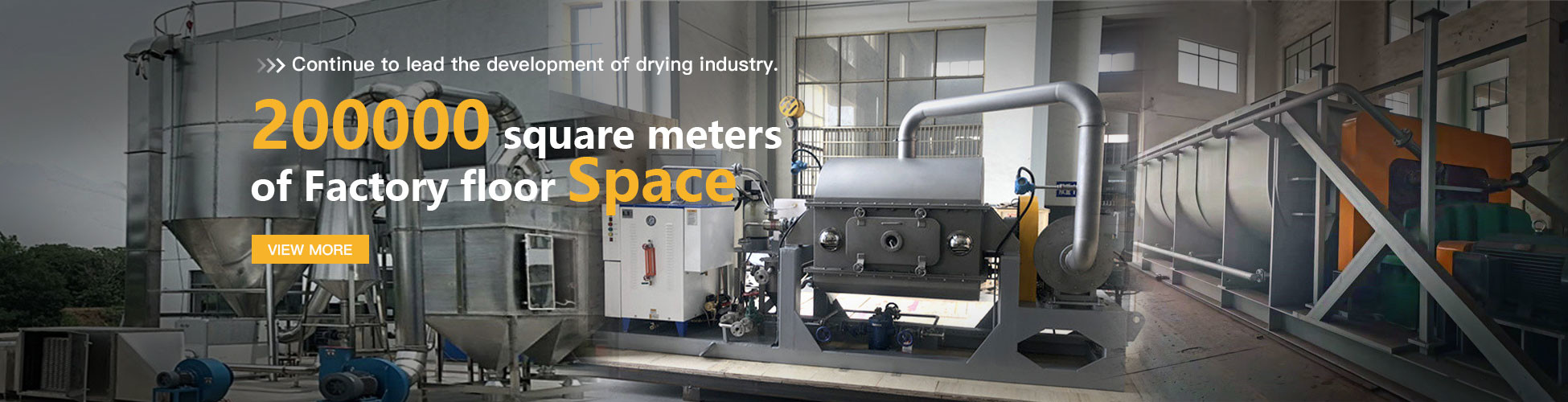
Jiangsu Shengman Drying Equipment Engineering Co.,Ltd, established in 2011, known as a local leading high-tech enterprise, is located in Zhenglu town, Changzhou, Jiangsu, China. Shengman is a large-scale production enterprise in China drying industry with a registered capital of 100,000,000 RMB, specialized in designing &manufacturing various kinds of dryers, granulators, mixers, grinders ,dust removers, etc. Shengman owns an area of over 200,000㎡, and realizes annual sales of over 70,000,000RMB ...
Learn More

0

Year Established

0

Million+
Employees

0

Million+
Annual Sales
China Jiangsu Shengman Drying Equipment Engineering Co., Ltd HIGH QUALITY
Trust Seal, Credit Check, RoSH and Supplier Capability Assessment. company has strictly quality control system and professional test lab.
China Jiangsu Shengman Drying Equipment Engineering Co., Ltd DEVELOPMENT
Internal professional design team and advanced machinery workshop. We can cooperate to develop the products you need.
China Jiangsu Shengman Drying Equipment Engineering Co., Ltd MANUFACTURING
Advanced automatic machines, strictly process control system. We can manufacture all the Electrical terminals beyond your demand.
China Jiangsu Shengman Drying Equipment Engineering Co., Ltd 100% SERVICE
Bulk and customized small packaging, FOB, CIF, DDU and DDP. Let us help you find the best solution for all your concerns.

Quality Spray Drying Machine & Hollow Paddle Dryer manufacturer

Find Products That Better Meet Your Requirements.
Cases & News
The Latest Hot Spots
Safe and Efficient Granulation Methods for Heat-Sensitive Food Additives
  1. Industry Challenges Heat-sensitive food additives such as vitamins, enzyme powders, and flavorings are prone to degradation or evaporation during processing. Traditional wet granulation or high-temperature methods may reduce active components, affecting functionality and flavor. 2. Dry Granulation Technology Principle Roller Compactor dry granulation mechanically compresses powder into high-density sheets, then cuts them into uniform granules. No water or high-temperature treatment is required, preserving heat-sensitive components. Adjustable roller gaps and hydraulic systems allow precise control of granule density and hardness. 3. Technical Advantages Activity Preservation: Maximizes retention of heat-sensitive ingredient activity, ensuring functional integrity. Uniform Granules: Cutting and secondary milling ensure consistent particle size, improving flowability and mixing uniformity. Energy Efficient: No water or drying needed, reducing energy consumption and production cost. Operational Safety: Excellent sealing prevents dust leakage, ensuring operator safety. 4. Application Examples Dry granulation is suitable for nutritional powders, functional beverage premixes, and flavor blends. Optimized granules improve solubility, uniformity, and downstream processing performance, enabling efficient and stable production lines. 5. Conclusion For food manufacturers, using dry granulation for heat-sensitive additives ensures activity and flavor preservation while increasing production efficiency—a key technique for achieving high-quality, controllable processing in the food industry

2026

06/04

Dry Granulation vs Wet Granulation in Food Industry
A Complete Comparison for Food Powder Processing 1. Introduction In the food processing industry, powder handling plays a critical role in product quality, stability, and manufacturing efficiency. Two widely used methods for powder granulation are dry granulation and wet granulation. Both techniques are used to improve powder flowability, reduce dust, enhance compressibility, and ensure uniform mixing. However, they differ significantly in process, equipment, cost, and application. This article provides a detailed comparison of dry granulation vs wet granulation in food industry applications, helping manufacturers choose the right solution for their production needs. 2. What is Dry Granulation? Dry granulation is a process that compacts powder materials without using any liquid binder. It typically uses mechanical pressure, such as a roller compactor or slugging system, to form dense flakes or briquettes, which are then milled into granules. Key Characteristics: No liquid or solvent required Uses high pressure compaction Suitable for heat- or moisture-sensitive materials Simple and energy-efficient process Common Food Applications: Milk powder reprocessing Cocoa powder agglomeration Seasoning and spice powders Instant beverage powders Protein and nutritional powders 3. What is Wet Granulation? Wet granulation involves adding a liquid binder (such as water or food-grade solutions) to powder materials to form agglomerates. The wet mass is then dried and sized into granules. Key Characteristics: Requires liquid binder Includes mixing, wet massing, and drying steps Produces strong and uniform granules More time and energy consuming Common Food Applications: Instant drink mixes Baking ingredient premixes Flavored powder blends Food additives requiring high uniformity 4. Dry Granulation vs Wet Granulation: Key Differences Feature Dry Granulation Wet Granulation Liquid usage No liquid required Requires binder solution Process steps Simple (compaction + milling) Complex (mixing + drying) Energy consumption Low High Equipment cost Moderate Higher (includes dryer) Suitable materials Heat/moisture-sensitive powders Stable powders Production speed Faster Slower Dust control Good Excellent Granule strength Medium High 5. Advantages of Dry Granulation in Food Industry Dry granulation is increasingly preferred in modern food manufacturing due to its simplicity and efficiency. Key Advantages: No need for drying process Suitable for heat-sensitive food ingredients Lower production cost and energy consumption Reduced processing time Environmentally friendly (no liquid waste) Easy integration into continuous production lines Especially in industries like milk powder, cocoa processing, seasoning, and nutritional supplements, dry granulation is widely adopted. 6. Advantages of Wet Granulation Wet granulation still plays an important role in certain food applications where strong binding and uniform particle structure are required. Key Advantages: Produces very strong and stable granules Excellent content uniformity Suitable for complex formulations Better control over granule size distribution However, it requires more equipment, energy, and processing time. 7. When to Choose Dry Granulation? Dry granulation is the preferred option when: The material is sensitive to heat or moisture A simple and cost-efficient process is required Continuous production is preferred Dust reduction and flowability improvement are needed Reprocessing of fine food powders is required 8. When to Choose Wet Granulation? Wet granulation is more suitable when: Strong granule formation is required The formulation allows moisture and drying High uniformity is critical Complex ingredient binding is needed 9. Industry Trend: Why Dry Granulation is Growing in Food Manufacturing In recent years, food manufacturers are increasingly shifting toward dry granulation technology because it offers: Lower operational cost Cleaner production process Better energy efficiency Continuous manufacturing compatibility Reduced environmental impact With the growth of instant food products and nutritional powders, demand for roller compaction dry granulation systems continues to increase globally. 10. Conclusion Both dry granulation and wet granulation are important technologies in food powder processing. However, their applications differ based on material properties and production requirements. Dry granulation is ideal for efficient, low-cost, and moisture-sensitive food processing. Wet granulation is suitable for high-strength and highly uniform granule production. For modern food manufacturing, dry granulation is becoming the preferred solution due to its simplicity, efficiency, and sustainability.

2026

06/17